
Bhooshan Thakar
SVP and GM of InfoScale
Resilience That Thinks, Adapts, and Heals Itself
Arctera InfoScale Resilience Powered by AI
The truth is digital transformation has quickly pushed every organization into hybrid and multi-cloud models. AI workloads are exploding. At the same time, cyberattacks are more sophisticated, outages are more costly, and the margin for error has all but disappeared. Yet the way most enterprises defend their operations hasn’t changed. Responding to the unexpected is still reactive. Runbooks are still manual. Backups remain the last line of defense. This makes resilience fragile, and rebuilds and downtime inevitable, and the stakes are higher than ever.
At Arctera, we believe it’s time for a new standard. One where resilience is intelligent, adaptive, and autonomous.
Why AI-Powered Resilience Matters Now
Downtime costs have reached staggering levels, exceeding $400 billion annually across global enterprises. AI workloads amplify this risk where every interruption can potentially halt analytics, disrupts training cycles, and breaks business continuity.
At the same time, the threat landscape has shifted. Ransomware and insider attacks are targeting the data layer, the foundation of every digital business and often the blind spot of traditional tools. When defenses are blind to how or why applications and data are moving, it’s impossible to determine threats to them until damage has already appeared.
Resilience can’t afford to be reactive anymore. InfoScale’s full stack resilience launches operations towards a new dimension of self-healing operations that predicts true risks, defends in real time, and recovers autonomously. Now possible when analysis is powered by AI at scale. By embedding intelligence into the data resilience foundation trusted by thousands of enterprises, InfoScale becomes the first platform that can:
- Anticipate failures before they disrupt.
- Defend at the data layer, the number one attack target.
- Recover applications automatically and in the right sequence.
- Continuously optimize operations for performance and cost.
This is not backup. This is not traditional disaster recovery.
This is resilience that thinks, adapts, and heals itself.
Advancing from Detection to Understanding.
Every enterprise has anomaly detection. But almost none have context. Traditional systems trigger on thresholds, spikes, or deviations which alert you that “something” happened, without understanding what or why. That leads to noise, false positives, and missed signals that hide the real risk. InfoScale changes this madness.
By embedding AI directly into the data resilience layer, the same foundation that understands every dependency across applications, services, and infrastructure — InfoScale delivers contextual intelligence. It correlates behaviors across the full application stack to determine whether deviations represents a normal workload shift, a performance fluctuation, or a true indicator of threat or failure.
Today:
- Context-Aware: InfoScale interprets data patterns in relation to how your applications and infrastructure actually operate — distinguishing risk from routine behavior.
- Deeply Correlated: Cross-layer visibility allows InfoScale to connect subtle data anomalies with upstream or downstream causes from storage latency to service misconfigurations.
- AI-Accelerated: Machine learning models continuously refine understanding of what “normal” looks like for your unique environment, detecting changes that rule-based systems never would.
- Proactively Actionable: Instead of waiting for failures to manifest, InfoScale surfaces meaningful anomalies — the ones that predict impact — and can automatically respond based on your preferred policies and risk tolerance.
For security and operations leaders, this is the difference between seeing noise and understanding risk. InfoScale identifies true threats and operational degradations in real time, across hybrid and multi-cloud environments.
Our evolution toward intelligent resilience is already underway. With AI-driven anomaly detection available today, enterprises are taking the first step toward fully autonomous operations.
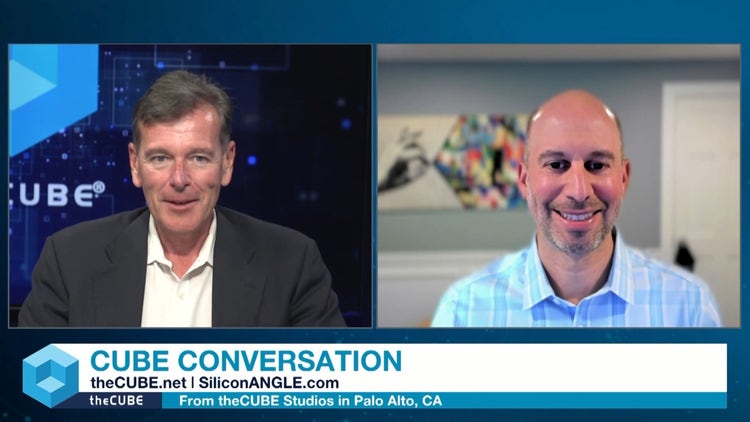
Watch the CUBE conversation with Matt Waxman, Chief Product Officer at Arctera, and Christophe Bertrand, Principal Analyst at theCUBE Research*,* as they discuss how AI is redefining enterprise resilience.
The Path to Self-Healing Operations
What’s Next:
- Predictive fault analysis that anticipates and prevents failures before they occur.
- Dynamic recovery orchestration that prioritizes based on business impact.
- Continuous learning models that refine resilience strategies with every event.
Each phase brings organizations closer to the ultimate goal of self-healing operations that sense, respond, and recover automatically without needing or waiting for human intervention.